

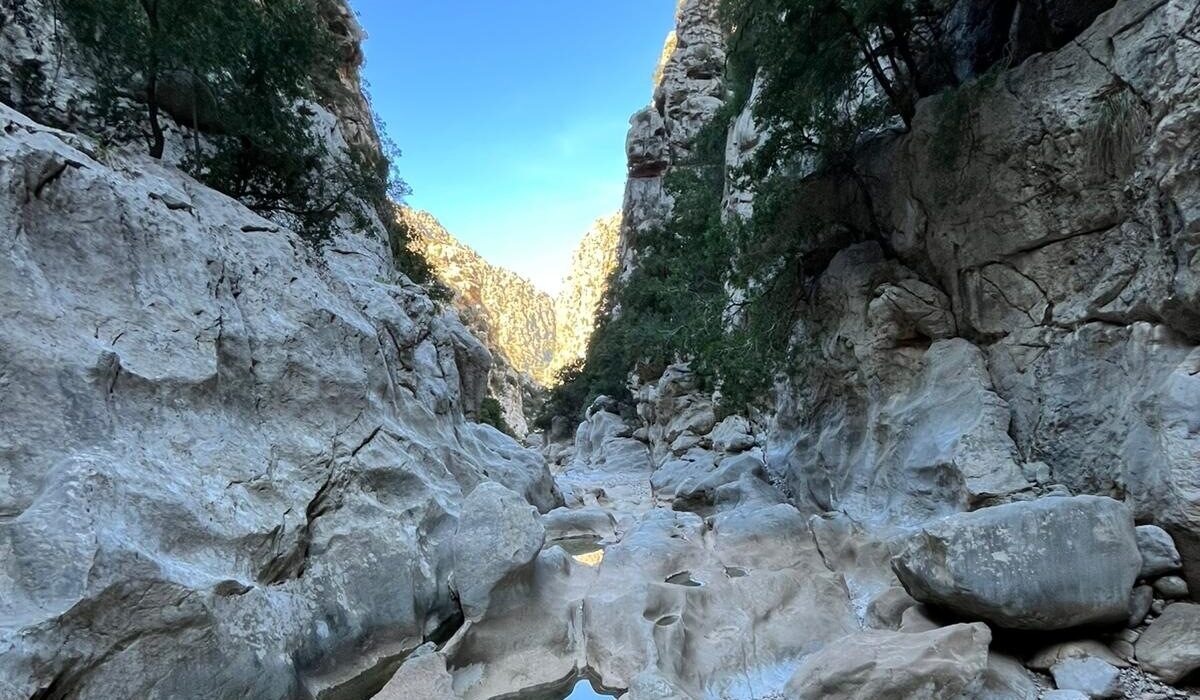
This route descends from the Tramuntana mountain range to the cove of Sa Calobra, crossing the impressive Torrent de Pareis canyon, declared a Natural Monument in 2003. Although the itinerary is mostly downhill, it is by no means an easy walk. Contacting a guide is recommended. He’ll know the terrain, identify the easiest passages, and adapt the pace to the group so that the experience remains enjoyable for everyone.
A family day in Torrent de Pareis

Photo by M. Quitián
The S. family had been enjoying Mallorca for several days. They had already discovered some of the island’s finest corners, combining gastronomy, culture, and outdoor activities. When the time came to explore the mountains, they wanted something special: to experience Torrent de Pareis, one of the most spectacular landscapes in the Serra de Tramuntana.
Spring is probably the best time of year to walk this route. In April and May, the vegetation is at its greenest, temperatures are usually pleasant, and the days are long. With good planning, it is possible to make the most of the many shaded sections and enjoy a beautiful day of hiking.
Together with Apolline Addor, who specialises in designing bespoke experiences for international visitors, we planned a day adapted to the whole family: four adults and two children. The objective was simple: to create a smooth, enjoyable, and safe experience in which everyone could enjoy the journey. The hike takes up a long morning, with constantly changing scenery, and often passes more quickly than many people expect.
We met in Escorca shortly after 8 a.m. They arrived in a V-Class, rested and ready to walk. Before setting off, we discussed a few practical details: footwear, sun protection, and how much water each person was carrying. As I often do on this route, I carried several extra litres of water in my backpack in case anyone needed a refill along the way.
The route descends from the surroundings of Escorca to the cove of Sa Calobra, crossing the impressive Torrent de Pareis canyon, declared a Natural Monument in 2003. Although the itinerary is mostly downhill, it is by no means an easy walk. It is the guide’s responsibility to know the terrain well, identify the easiest passages, and adapt the pace to the group so that the experience remains enjoyable for everyone.
During the first part of the route, we crossed the holm oak forest and descended slopes covered with carritx grass. There was time to talk about the history of the area, the old smuggling routes, and some curiosities about life in these mountains.
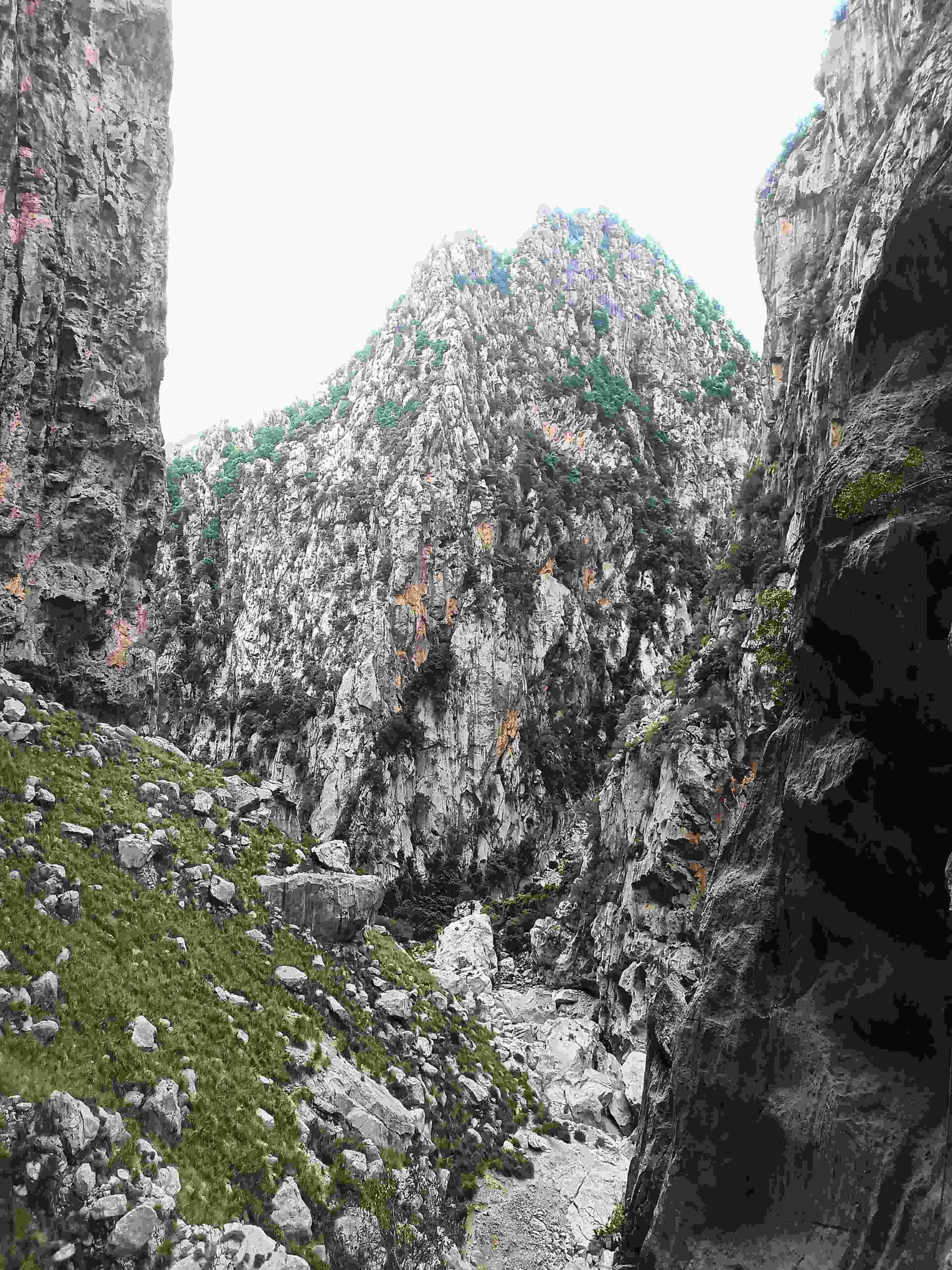
Between conversations, we reached s’Entreforc, the point where the Lluc and Gorg Blau streams meet to form Torrent de Pareis. Here, the landscape changes completely. The gorge narrows, the cliffs rise high above our heads, and the route winds its way between huge rocks shaped by thousands of years of water erosion.
The younger members of the family adapted to the terrain with surprising ease. They jumped from boulder to boulder, explored every corner, and tackled the small scrambling sections with enthusiasm. Much of the route requires concentration, careful foot placement, and a cautious approach through a few short scrambling sections. With a few tips and occasional assistance, everyone moved comfortably and confidently through the terrain.
On the easier sections, the children curiously asked about the birds and other animals found on the island — topics I especially enjoy thanks to my background in biology. I also remember a conversation between the parents.
“We’ll remember this day in ten years” one of them said.
The reply came immediately:
“In ten years — and for the rest of our lives!”
Halfway through the route, we stopped briefly in the shade to rest, drink some water, and share a few nuts. Between bites, a few local legends also emerged — stories passed down through generations about the people who once lived in landscapes like this.
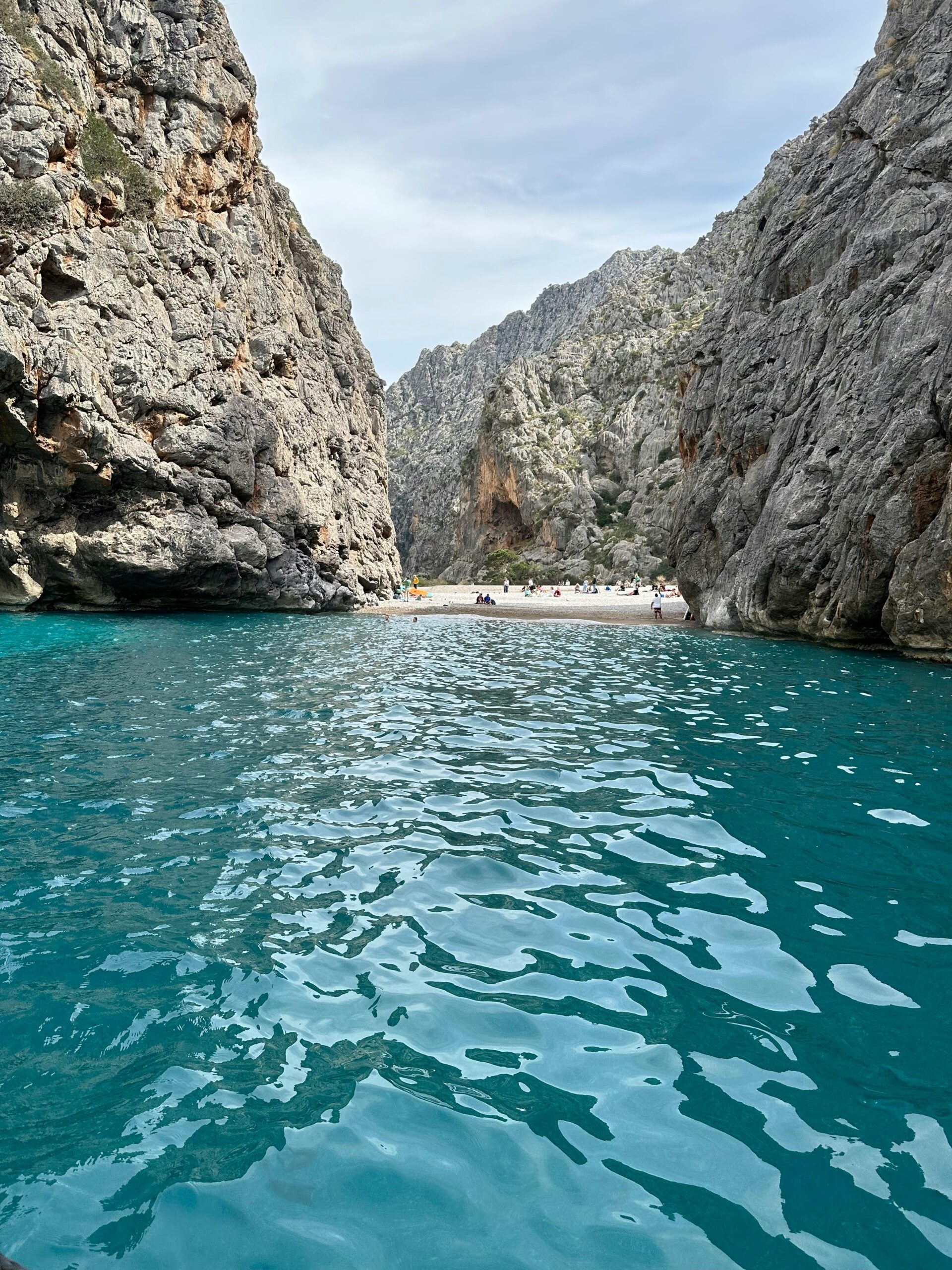
Eventually, the deep blue of the Mediterranean appeared between the rock walls. Arriving at Sa Calobra always feels special. After a morning in the mountains, the sea offers a sense of openness that is difficult to describe.
An elegant Fjord 40 Open was waiting to take them onwards to Cala Tuent, where Apolline Addor had arranged lunch at Es Vergeret. There, food and landscape come together beautifully. Those dramatic cliffs would accompany them all the way to their final destination: Port de Sóller.
As I watched them head off, I thought the plan had fulfilled its purpose perfectly. It had been one of those days when everything simply fell naturally into place.