

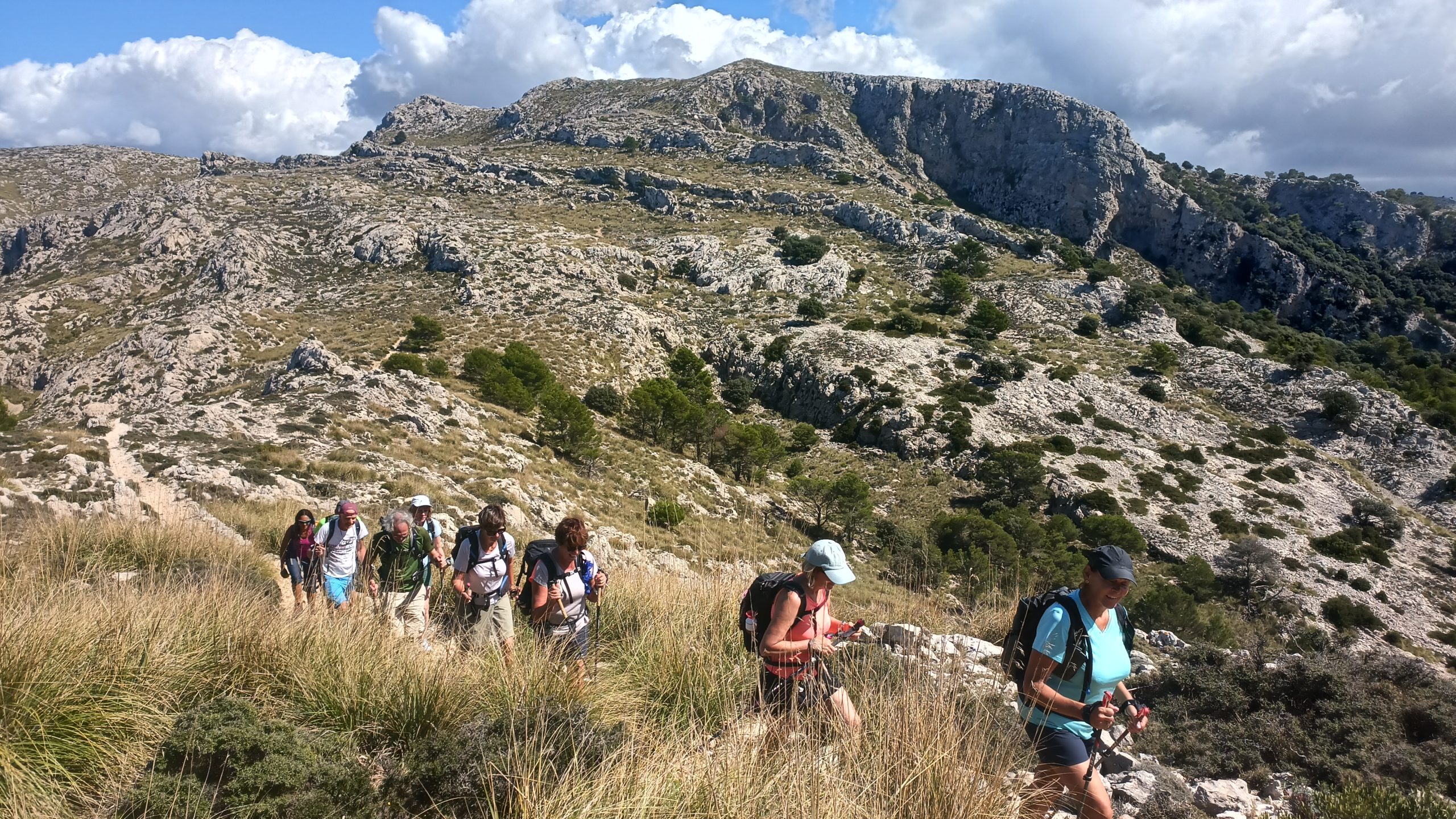
Mallorca is well known for its coves and beaches, but those who explore it on foot discover a completely different island: historic paths, mountain landscapes, cliffs, and a network of trails that cross some of the most spectacular environments in the Mediterranean.
Whether you are looking for a gentle route or a more demanding experience, hiking in Mallorca offers options for all levels.
Easy hiking routes in Mallorca
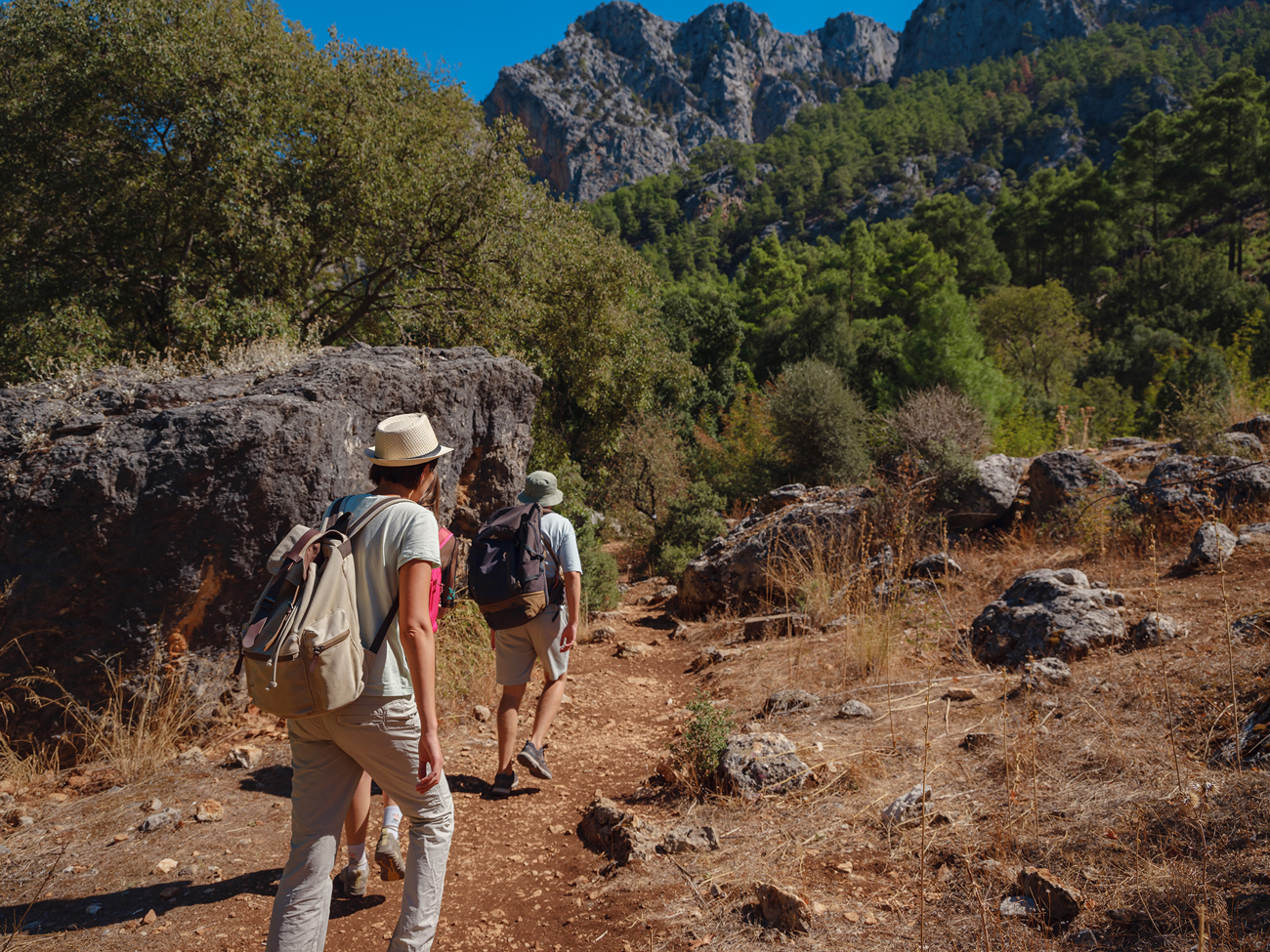
If you are just starting out or simply want to enjoy without complications, there are accessible and very rewarding routes.
Some recommended options:
- Camí de s’Arxiduc (gentle sections).
- Route to Cala Mondragó.
- Puig de Maria (from Pollença).
Ideal for:
- First mountain experiences.
- Family outings.
- Enjoying the landscape without technical difficulty.
Intermediate hiking routes
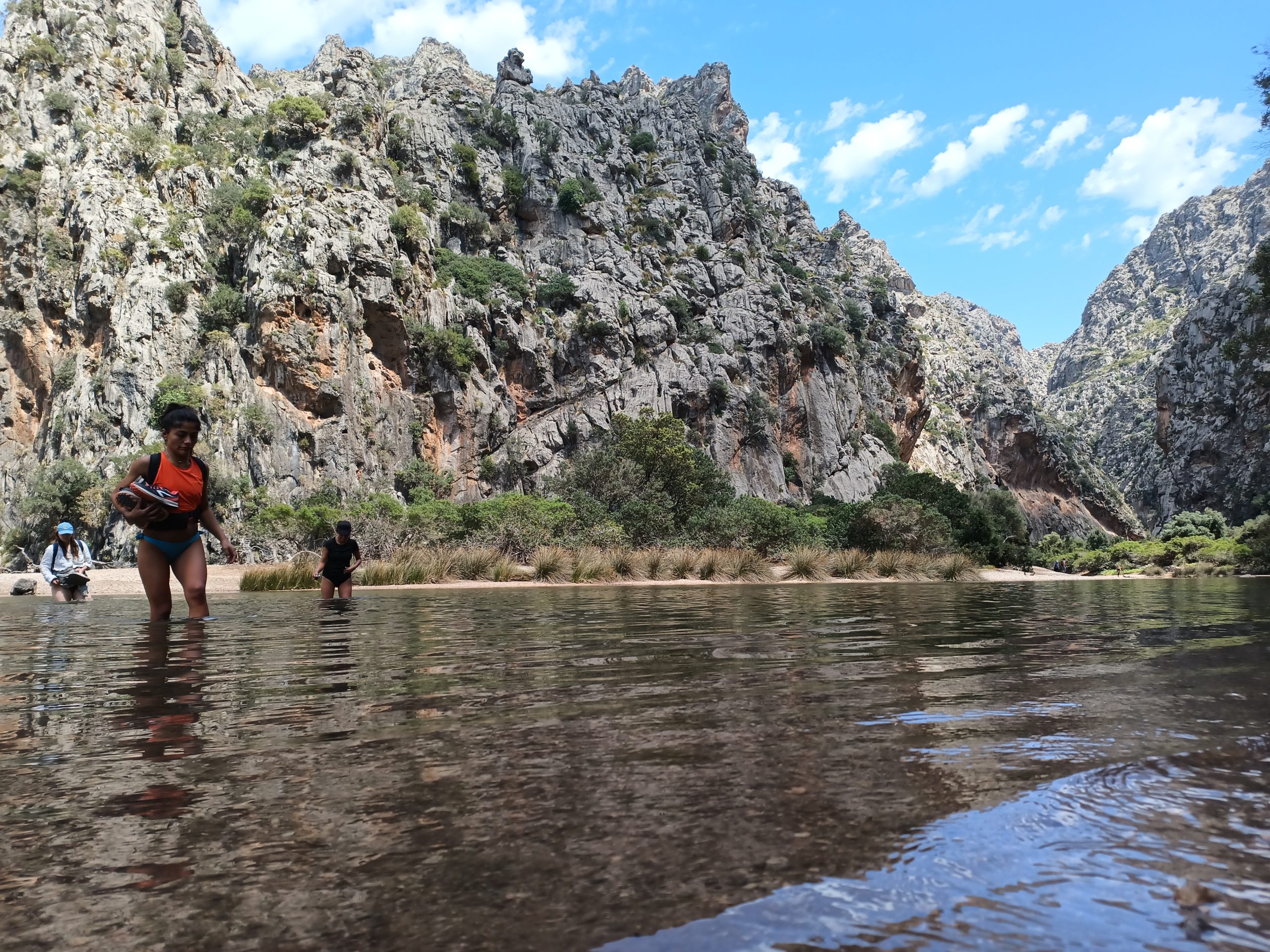
If you already have some experience, Mallorca allows you to explore more varied terrain within the Serra de Tramuntana.
Highlighted routes:
- Barranc de Biniaraix.
- Puig de l’Ofre.
- Camí de Castelló desde Deià.
Here you will find:
- Moderate elevation gain.
- Traditional stone-paved paths.
- More open and mountainous landscapes.
Challenging routes for experienced hikers
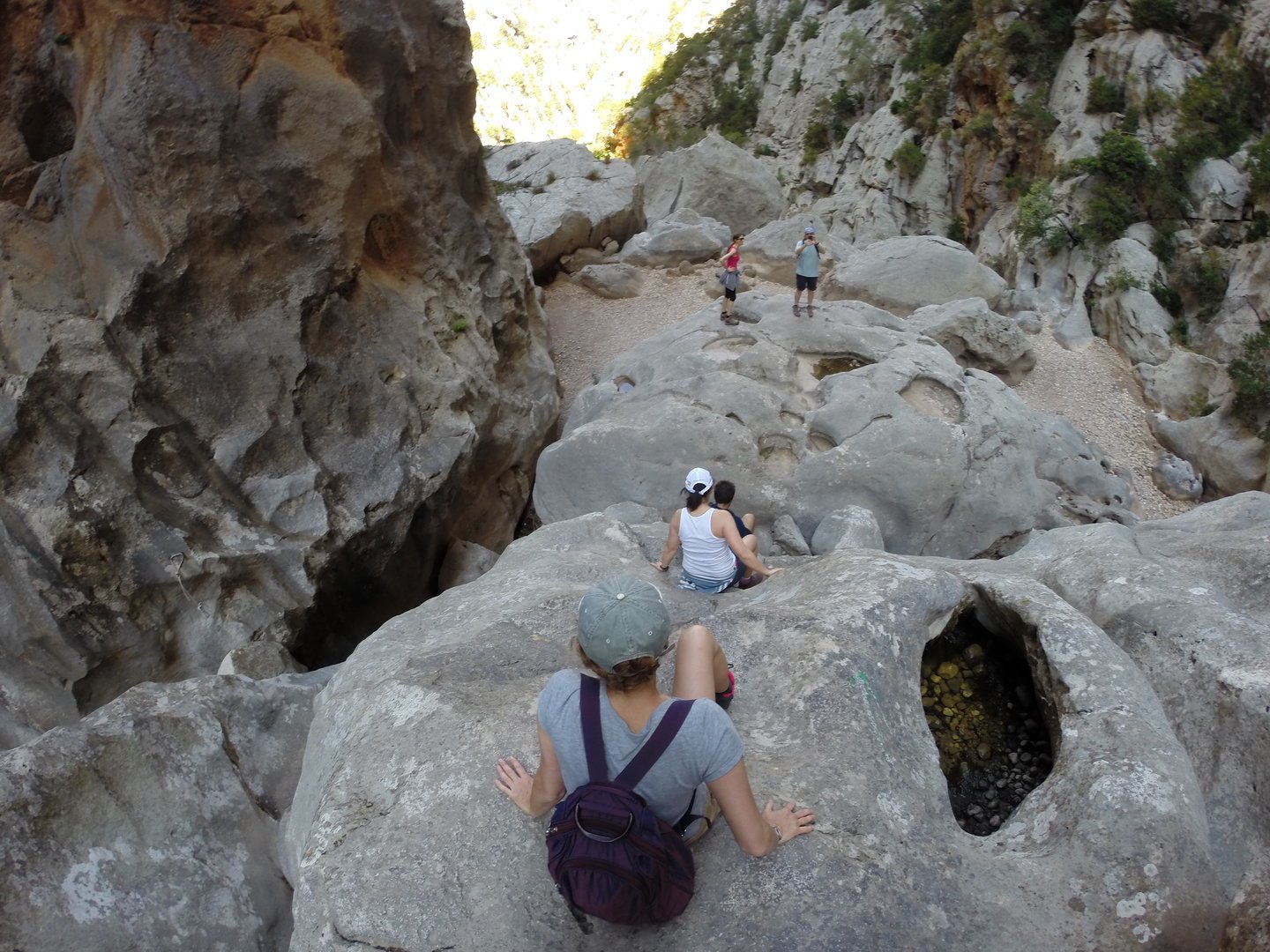
For those looking for a challenge, Mallorca also offers longer and more demanding itineraries.
Some well-known routes:
- Torrent de Pareis.
- Stages of the GR-221.
- Summits of the Tramuntana range.
They require:
- Good physical condition.
- Planning.
- Knowledge of the terrain.
Tips for hiking in Mallorca
Before heading out, it is important to keep a few key aspects in mind:
- Avoid the hottest hours, especially in summer.
- Bring enough water; many routes have no fountains.
- Wear appropriate footwear; the rock can be slippery.
- Check the weather forecast.
- Respect the environment and private property.
Discover the island with professional guidance
Mallorca has a very extensive network of paths, but it is not always easy to navigate or choose the best option depending on conditions.
Having a guide allows you to adapt the experience to your pace, discover lesser-known routes, and enjoy the environment with greater safety.
You can see more about hiking routes here.
Beyond the path: another way of understanding the mountains
Hiking is not only about covering distance. It is also about observing, adapting to the environment, and sharing the experience.
In some cases, walking becomes a tool to bring the mountains closer to people with different abilities or needs, creating inclusive and enriching experiences.
You can learn more about this approach here.